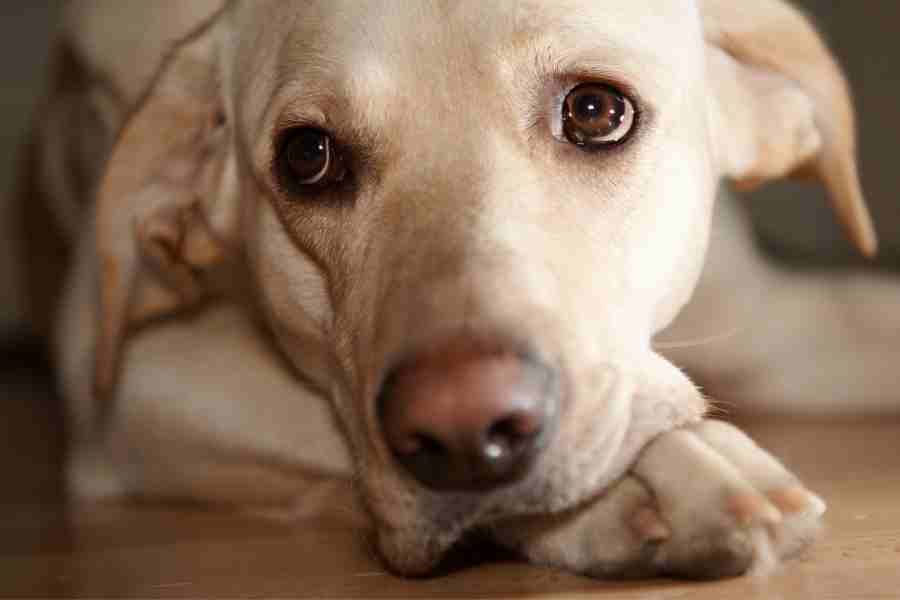
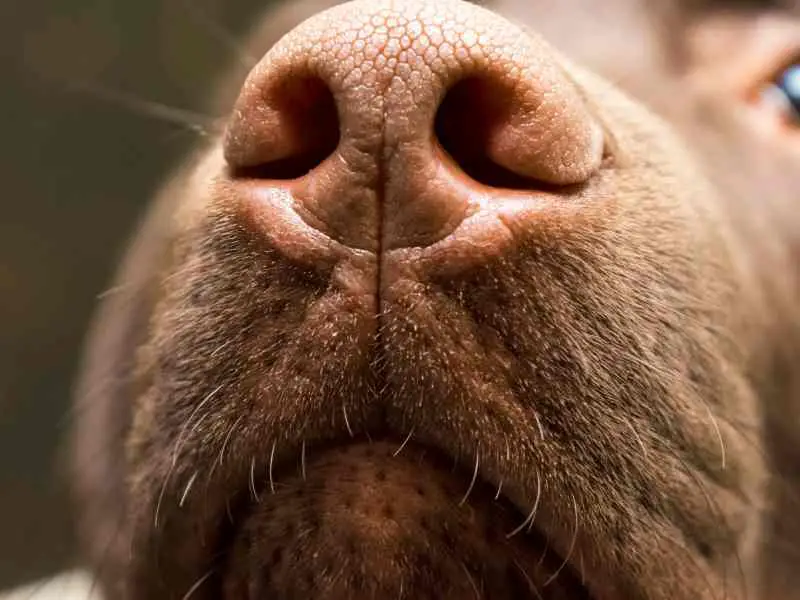
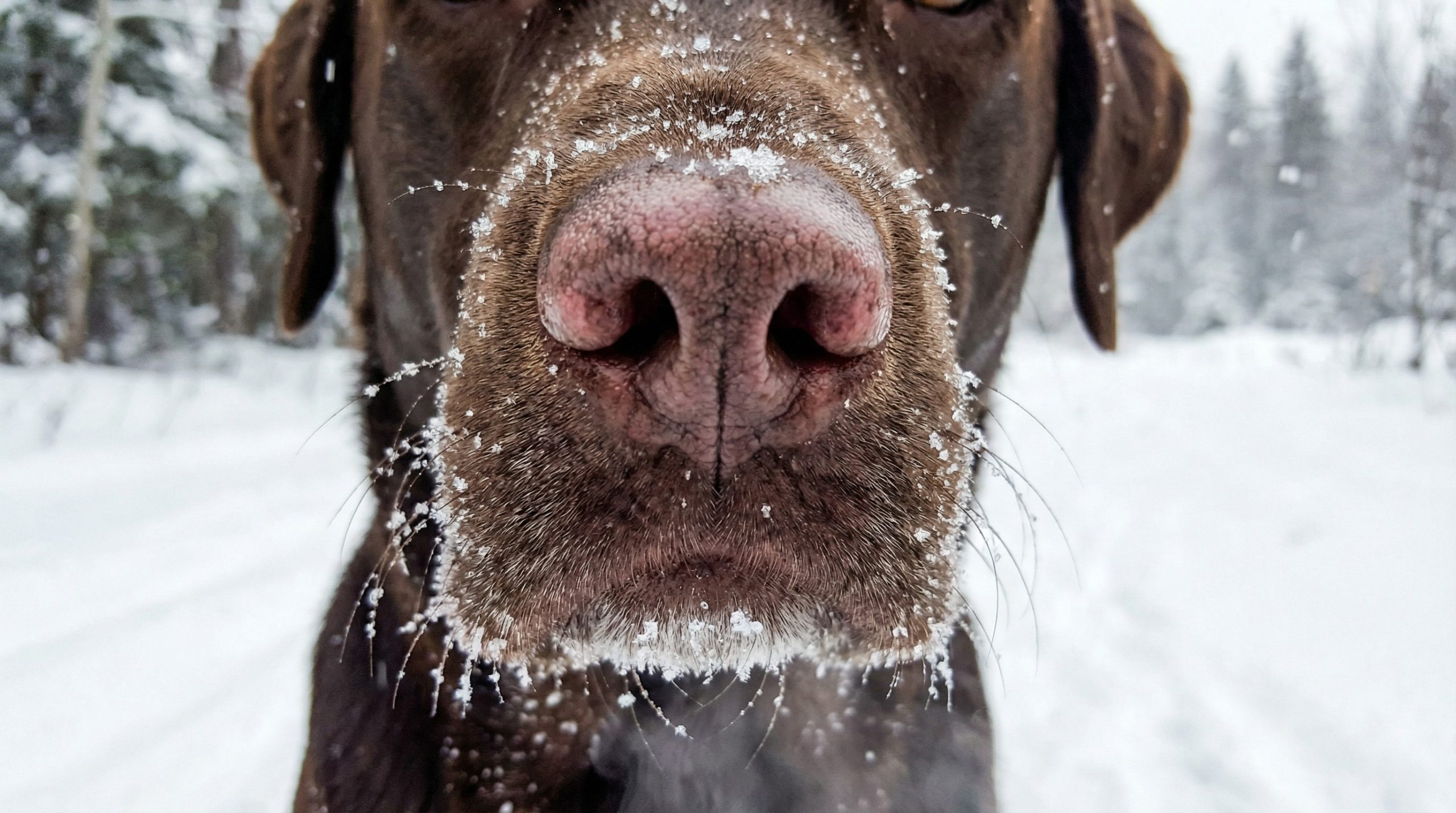
Suddenly showing pink instead of black: Many dog owners are surprised when their four-legged friend’s nose visibly lightens during the cold season. The change is especially noticeable in popular family dogs like Labrador Retrievers and Huskies.
But what exactly causes this – and is it cause for concern? We’ll explain this fascinating phenomenon.
Why Does a Dog’s Nose Change Color in Winter?
The exact mechanism behind snow nose isn’t fully understood yet. There’s very little research on this phenomenon. Scientists and veterinarians believe the nose temporarily loses pigmentation in winter because reduced sun exposure causes the body to deposit fewer pigments in exposed areas like the nose.
Normally, the pigment melanin serves to protect skin from excessive sun exposure. In winter, skin receives less sunlight, which may result in less melanin being deposited.
Which Dogs Get Snow Nose?
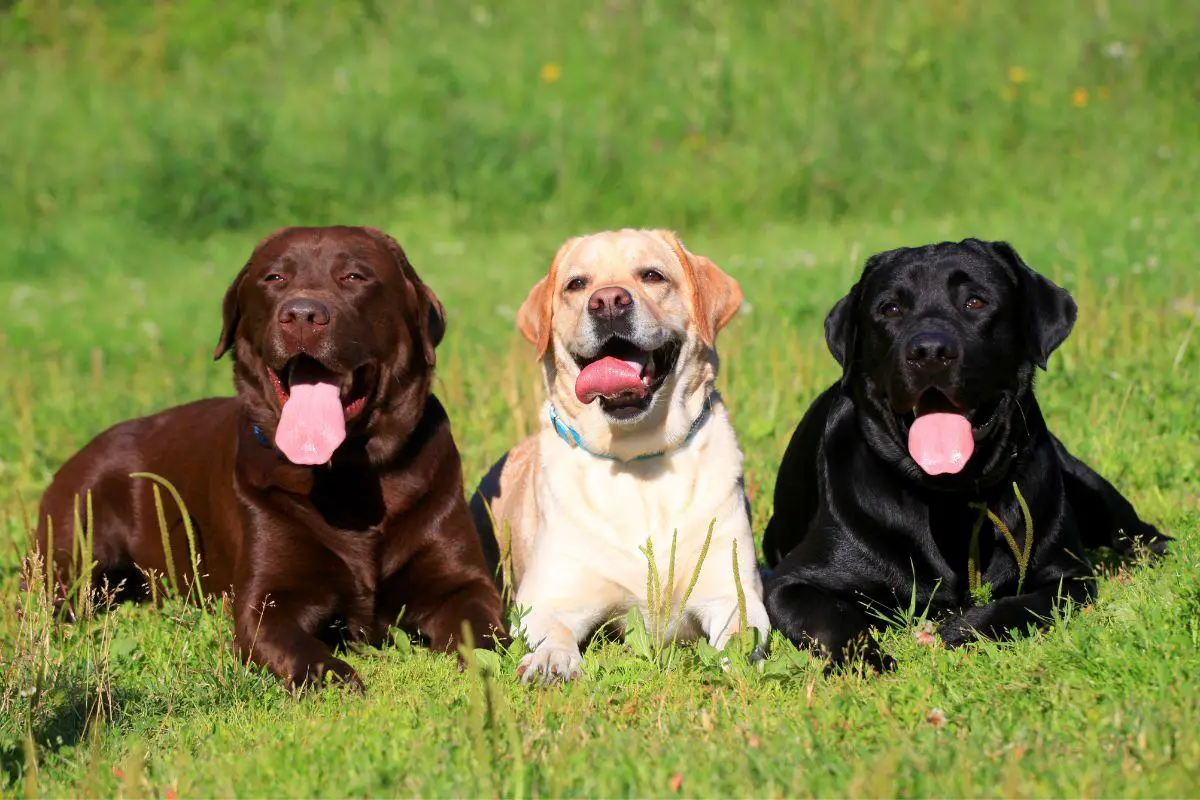
It was once thought that primarily northern-bred dogs were affected. In theory, however, any dog can develop snow nose once temperatures drop. That said, certain breeds are more prone to it, including:
- Huskies
- Golden Retrievers
- Labrador Retrievers
- Bernese Mountain Dogs
Is Snow Nose Painful for Dogs?
It’s simply a depigmentation (called hypopigmentation). Therefore, snow nose itself is completely harmless and not painful for dogs, which is why the topic remains largely unstudied.
However, there are other reasons why a dog’s nose color might change. Depigmentation can also occur with injuries or chemical burns to the skin. Especially in winter, when road salts are used, these can irritate dogs’ noses when they’re rooting around in the snow.
That’s why you should always look closely: If the nose’s surface is normal and the skin remains moist rather than dry or flaky, there’s generally no cause for concern.
Will the Nose Return to Its Original Color?
Usually, a winter nose only lasts for a limited time. Once it gets warmer and sun exposure increases, most dogs’ noses darken again.
Young dogs especially see their pigmentation return completely. In older dogs, however, parts of the nose may remain light, as they produce less melanin.
The Bottom Line: If you notice your Lab’s nose turning pink this winter, don’t worry! In most cases, this is just a harmless seasonal change, and your puppy will be absolutely fine. Snow nose is simply one of those quirky traits that make our furry friends even more interesting. As long as the nose stays moist and healthy-looking, you can rest easy knowing this is just nature doing its thing.